
Maimonides and the Goodness of the World
Ross Brann discusses Moses Maimonides, a 12th-century rabbi and scholar, on the Philosophy Talk podcast.
 Department Homepage
The College of Arts & Sciences
Department Homepage
The College of Arts & Sciences

The study of the Middle East and North Africa at Cornell includes the full geographic and temporal sweep from ancient Mesopotamia and Egypt to modern Turkey and Morocco. Our interdisciplinary faculty are committed to research that explores the rich history of the region, the diversity of languages and literatures, and religious, social, political, and cultural dimensions across time and place.


Interested in exploring the languages, literatures, cultures, religions, and history of the Middle East from antiquity to the modern day? Consider pursuing a major in Near Eastern studies.
Take Arabic, Hebrew, Turkish, or Persian to fulfill the College of Arts & Sciences language requirement.
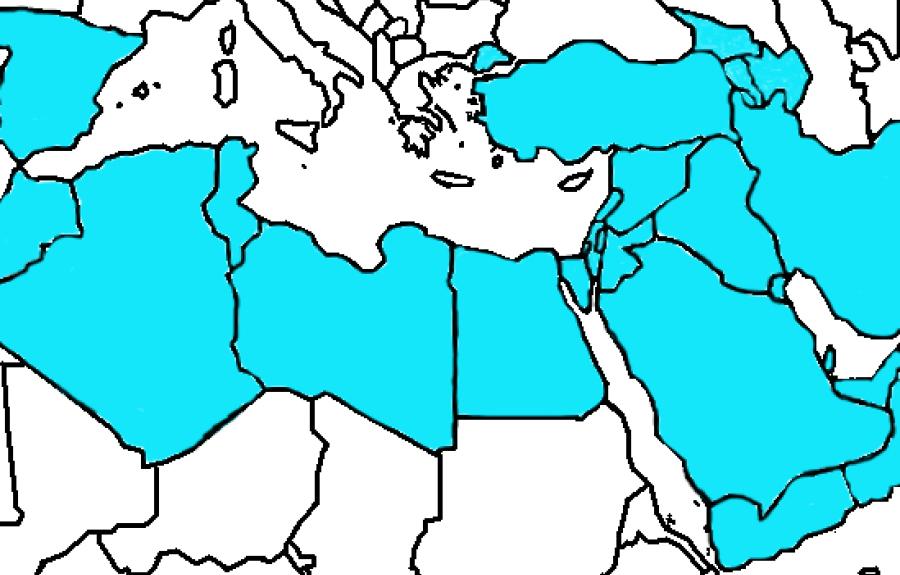
The Near East is an older term for the Middle East. As defined by the department, the “Near East” extends from Morocco (and medieval Spain), through Egypt, the Levant (Israel and Palestine, Syria, Lebanon, and Jordan), Turkey, Middle East & North Africa, and Southwest Asia.
Faculty specializing in the earliest millennia of the region’s history bring a range of disciplines, methods and theoretical orientations to bear on the study of what is conventionally called the ancient Near East. Geographically, our vision is wide, extending from the shores of the eastern Mediterranean to the lowlands of Mesopotamia, from the highlands of Anatolia and the Caucasus to the plains of southwestern Iran.
Ross Brann discusses Moses Maimonides, a 12th-century rabbi and scholar, on the Philosophy Talk podcast.

New books by Cornell scholars examine India’s economy, cultural heritage and global conflict. College of Arts & Sciences authors analyze development challenges in India and document endangered South Caucasus heritage.
Researchers from Cornell's College of Arts and Sciences have developed a forensics framework to document cultural heritage destruction. Their new book, "Heritage Forensics," examines threats to historic sites and advances methods for protecting endangered cultural heritage in war zones.

The School of Criticism and Theory at Cornell University, a six-week summer program that serves as a hub for interdisciplinary inquiry in the humanities and social sciences, celebrated its 50th anniversary with events June 16-17.

Lauren Weisberger’s novel The Devil Wears Prada is resurging with a 2026 film sequel, reflecting lasting cultural impact. The Cornell College of Arts and Sciences alum’s debut novel became a bestseller, film, and musical inspired by her Vogue experience.

Books featured by the alumni website Cornellians for May 2026 include, y Cornell College of Arts and Sciences alumni and faculty, a ‘poetic memoir,’ a study of the Gospel of John, and the final mystery from a genre luminary.

Scholars in Cornell’s College of Arts and Sciences are redefining trauma research across humanities, examining delayed memory’s effects on individuals, culture and history. Their insights from many different academic disciplines, including literature, history, archaeology and psychoanalysis connect trauma, testimony and collective witness.

Anees Mitri is majoring in government and Near Eastern studies.


